

The Timeless Journey of Jewelry
Welcome to the Henri Simon timeline, where we unveil the fascinating history of antique jewelry .
Jewelry has always existed, or at least since men and women have walked the earth. It often served a function beyond mere ornament and was frequently a symbol of wealth and status. Humanity’s fascination with precious materials also dates back to the dawn of civilization. Sources of gold, sapphires, and rubies are already mentioned in the earliest chapters of the Bible.
However, access to materials, their availability, and the techniques used to work them have constantly evolved. Jewelry evolved accordingly, yet differed from one region to another and from one era to the next.
It is rare to find antique jewelry on the market that predates the 18th century. The few exceptions from antiquity, discovered in tombs that were not plundered, are now held in museums around the world. The Louvre Museum in Paris, in particular, houses a remarkable collection of Roman-period jewelry. What is even more striking is how close their appearance remains to that of contemporary jewelry. Already at that time, gold was finely worked, and the combination with precious stones, as well as the use of enamel, testified to highly sophisticated craftsmanship.
With few exceptions, antique jewelry predating the 18th century is rare, and especially so before the French Revolution, or the so-called Georgian period across the Channel in England. The French Revolution was one of the most turbulent periods in French history, to such an extent that the English claimed there were three sources from which to buy diamonds: India, Brazil, and the French Revolution.
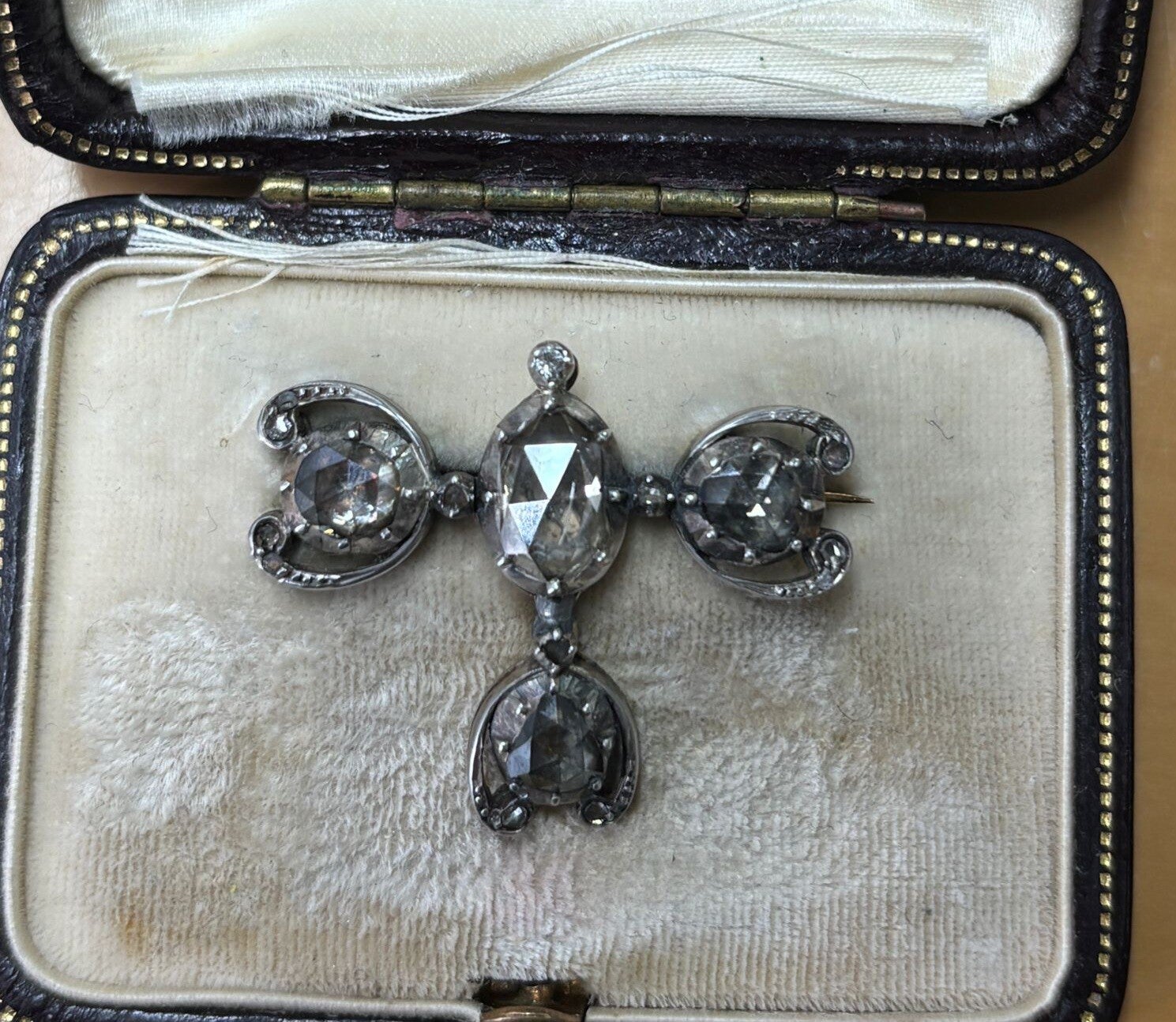
Georgian Era (1714–1837)
The Georgian period marks the true beginning of the antique jewelry market as we know it today. Every jewel of this era was made entirely by hand, long before industrial production.
Diamonds were cut and polished by candlelight, giving rise to the characteristic rose-cut and old mine-cut stones, prized for their soft, romantic glow. Stones were typically set in silver over gold, a technique that enhanced their brilliance under low light. Closed-back settings, often lined with coloured foil, were used to intensify the appearance of gemstones.
Jewelry was rare, precious, and deeply personal. Many pieces were unique creations, and survival rates are low due to the fragility of their construction and the frequent practice of melting jewelry down for its intrinsic value
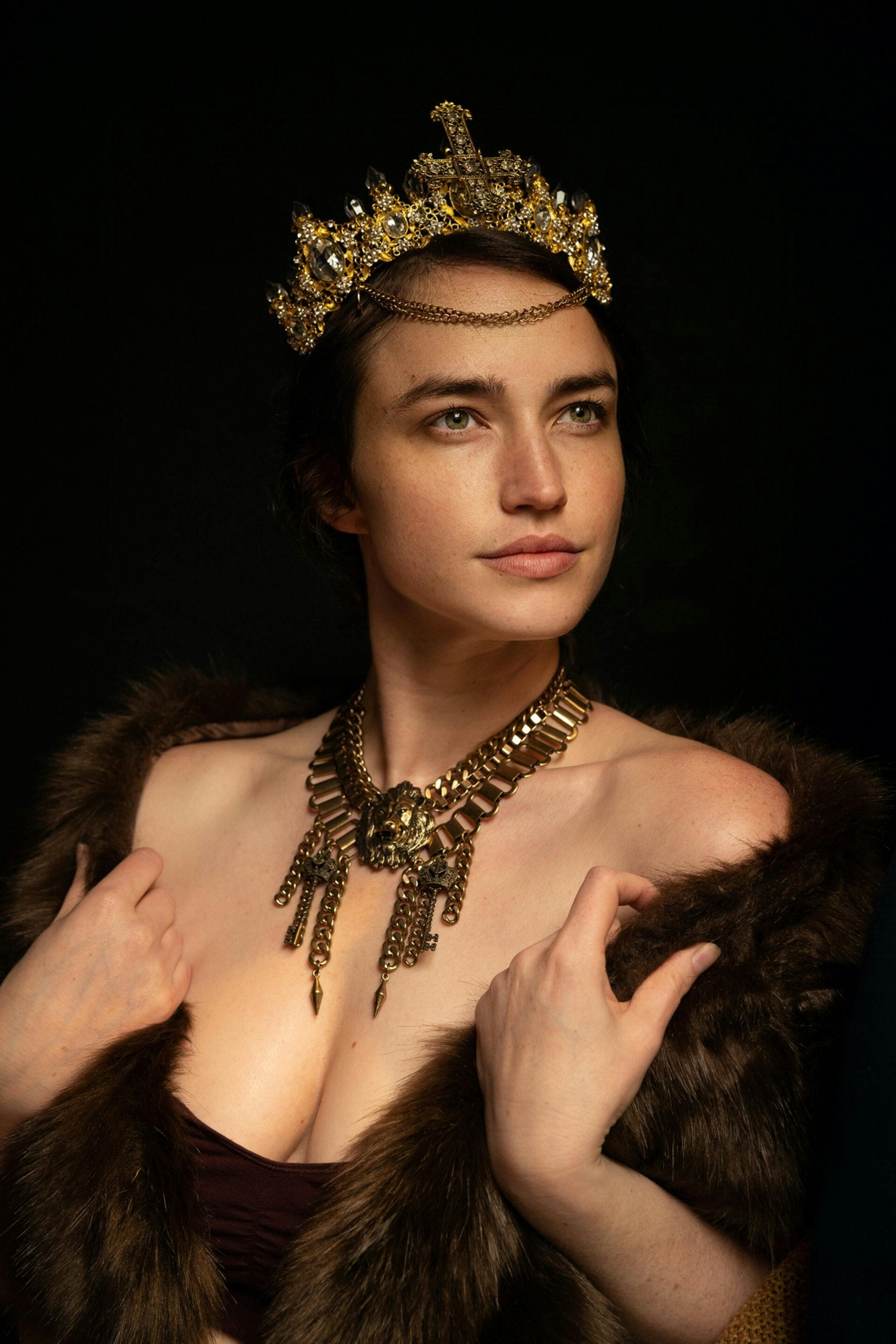
Empire Era (1804–1815)
Across the Channel, the Georgian era was still flourishing in England, while in France, however, the political and social upheavals of the Revolution had brought this world to an abrupt end. The fall of the monarchy not only transformed society, but also profoundly reshaped the language of jewelry.
With the rise of Napoleon Bonaparte and his coronation as Emperor in 1804, a new aesthetic emerged: the Empire style.
Jewelry of the Empire period drew its inspiration from the grandeur of classical antiquity. Laurel wreaths, imperial eagles, palmettes, and architectural motifs became central design elements, symbolizing victory, authority, and permanence.
Gold once again became the dominant material, worked with remarkable refinement and precision. While diamonds continued to be used, greater emphasis was placed on coloured stones and, most notably, on cameos. These finely carved reliefs, often depicting mythological figures or classical profiles, embodied the intellectual and artistic ideals of the time.

Victorian Era (1837 - 1901)
With the accession of Queen Victoria in 1837, a new era began—one that would profoundly shape the history of jewelry. If the Georgian and Empire periods reflected aristocratic refinement and imperial ambition, the Victorian age brought jewelry into a more personal and emotional realm, while technological progress allowed it to flourish on an unprecedented scale.
The early Victorian period, often called the Romantic phase, was deeply influenced by the Queen’s own life. Her love for Prince Albert inspired jewels rich in symbolism and sentiment. Serpents, representing eternal love, became especially popular after the Prince gave Victoria a serpent engagement ring. Lockets, heart motifs, and floral designs expressed intimacy and devotion, transforming jewelry into a language of feeling.
Following Prince Albert’s death in 1861, a profound shift occurred. The Queen entered a long period of mourning, and this sentiment spread throughout society. Mourning jewelry became an essential part of Victorian culture. Crafted in jet, onyx, or black enamel, and sometimes incorporating a lock of hair, these pieces served as tangible connections to lost loved ones. Jewelry became not only an ornament, but a vessel of memory.
At the same time, the Victorian era was marked by extraordinary technological and industrial progress. Advances in diamond cutting gave rise to the old mine cut and old European cut, increasing brilliance and fire. Improved lighting, no longer limited to candlelight, encouraged more open and luminous settings. Gold discoveries in California and Australia increased the availability of precious metals, allowing jewelry to be produced in greater quantities while still maintaining remarkable craftsmanship.

Edwardian Era (1901 - 1910)
With the death of Queen Victoria in 1901 and the accession of her son Edward VII, a new aesthetic emerged—one defined by refinement, lightness, and technical perfection. If Victorian jewelry reflected emotion and symbolism, the Edwardian era celebrated grace, sophistication, and brilliance.
This transformation was made possible by the mastery of platinum. Stronger and more durable than gold, platinum allowed jewelers to create extraordinarily fine and delicate settings while securely holding diamonds in place. For the first time, jewelry could achieve an almost weightless appearance, as if woven from light itself.
Designs were inspired by lace, ribbons, garlands, and bows. Every element was crafted with precision, often enhanced by milgrain detailing—tiny beaded edges that softened the transition between metal and stone. Diamonds dominated Edwardian jewelry, their increased brilliance perfectly suited to these airy, openwork creations. Pearls were also highly prized, adding softness and purity to the compositions.
The Edwardian period coincided with a moment of optimism, prosperity, and elegance in European high society. Great houses such as Cartier, Boucheron, and Van Cleef & Arpels rose to prominence, supplying aristocratic families and royal courts with jewels of extraordinary refinement.
Yet this era was to be brief. The outbreak of the First World War in 1914 brought an end to this world of lightness and splendour. Platinum was requisitioned for the war effort, and jewelry design would soon shift toward the bold geometry of the Art Deco period.
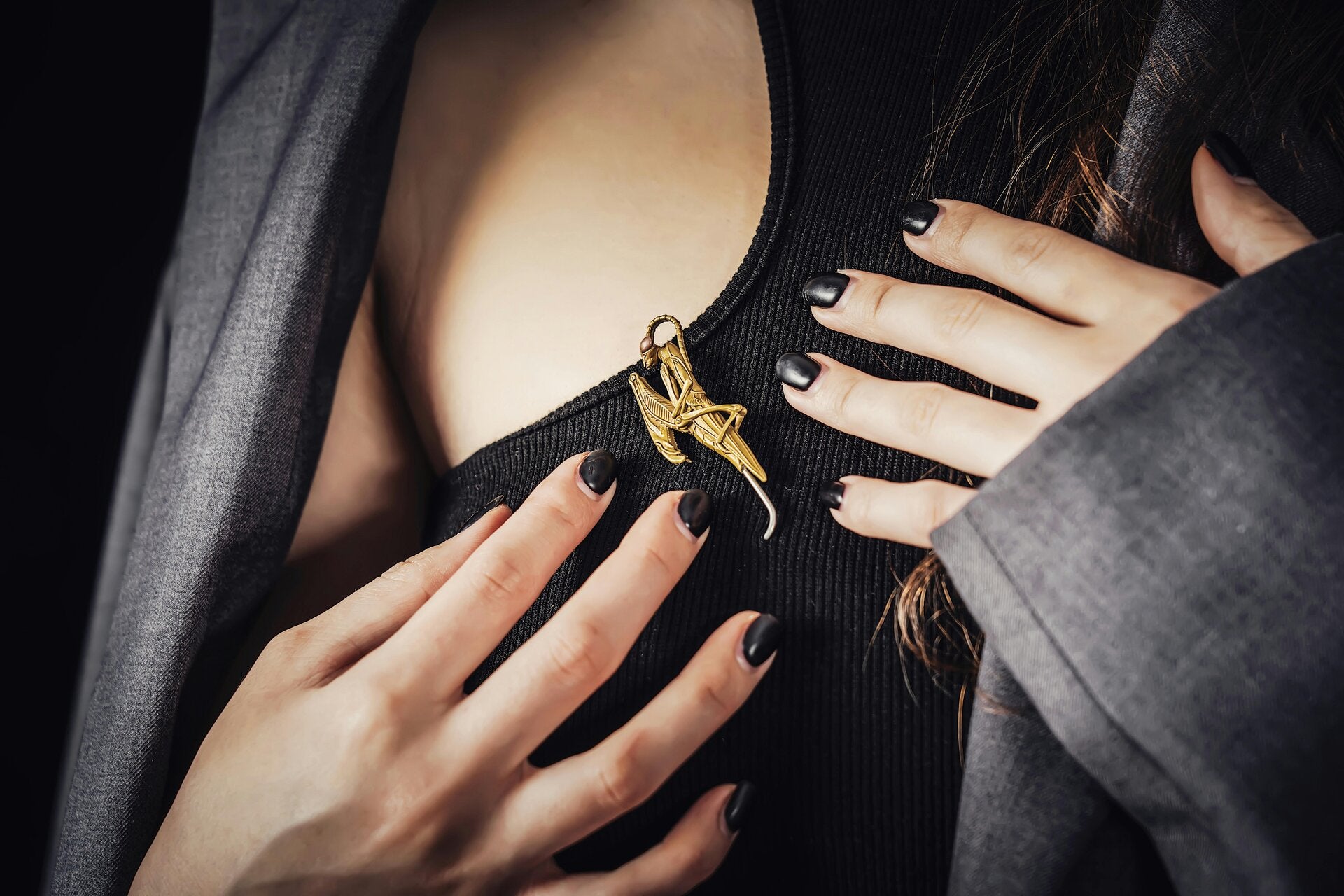
Art Nouveau (ca. 1890 - 1910)
At the end of the 19th century, as the Victorian era was drawing to a close, a profoundly different vision of jewelry emerged. Known as Art Nouveau, this movement rejected the rigid historical revivals that had dominated the century and sought instead to create an entirely modern aesthetic. Jewelry was no longer defined primarily by the value of its materials, but by its artistic expression.
Nature became the central source of inspiration. Flowing lines, asymmetry, and organic forms replaced the structured compositions of earlier periods. Jewelers drew upon flowers, insects, leaves, and the female form, transforming gold, enamel, and gemstones into living compositions. Dragonflies, orchids, swans, and mysterious feminine figures appeared frequently, reflecting both the beauty and symbolism of the natural world.
One of the most remarkable innovations of the Art Nouveau period was the extraordinary development of enamelwork. Techniques such as plique-à-jour, which allowed light to pass through translucent enamel like stained glass, achieved levels of refinement never seen before. These creations possessed a delicacy and luminosity that transcended traditional jewelry.
The movement was led by visionary artists such as René Lalique, who elevated jewelry to the status of fine art. In his work, the artistic idea took precedence over intrinsic material value. Humble materials such as horn, glass, and enamel were often favored over large diamonds, emphasizing creativity over opulence.
Art Nouveau jewelry represents a turning point in the history of jewelry design. It marked the moment when jewelers became artists, and jewels became expressions of imagination and emotion.
Today, Art Nouveau jewels are rare and highly prized. Their originality, craftsmanship, and artistic importance make them among the most fascinating creations of the modern era.
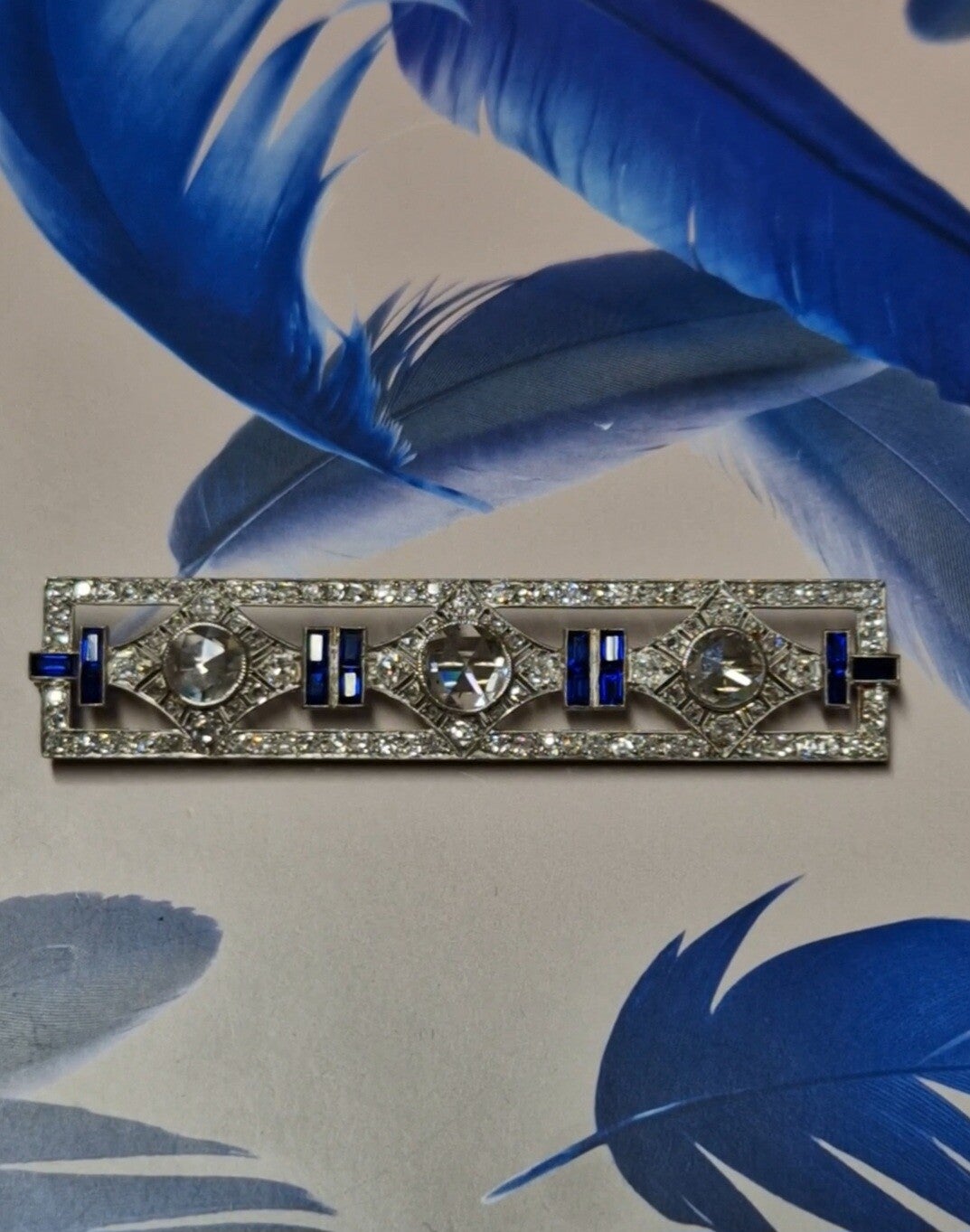
Art Déco (ca. 1915 - 1939)
Following the delicacy and fluidity of the Edwardian and Art Nouveau periods, jewelry entered a radically new phase. The aftermath of the First World War brought profound social and artistic change, and with it emerged a bold, modern style: Art Deco.
Unlike the organic curves of Art Nouveau, Art Deco embraced geometry, symmetry, and precision. Straight lines, stepped forms, circles, and sharp angles defined this new aesthetic.
Platinum became the defining metal of the era. Its strength allowed jewelers to create fine yet durable settings, perfectly suited to the era’s emphasis on precision. Diamonds dominated, now cut to maximize their brilliance under electric lighting. These were often combined with vividly coloured gemstones such as sapphires, emeralds, rubies, and onyx, arranged in strong, contrasting compositions.
Art Deco jewelry reflected the spirit of a changing world. It was an era of speed, confidence, and liberation. Women adopted a more independent role in society, and their jewelry reflected this transformation—bold, elegant, and unapologetically modern.
Today, Art Deco jewelry is one of the most sought-after periods among collectors. Its timeless modernity, exceptional craftsmanship, and unmistakable identity ensure its enduring appeal.
It is jewelry that marked the true beginning of the modern age.

Rétro (ca. 1935 - 1950)
As the world entered the turmoil of the Second World War, jewelry once again adapted to a new reality. The Retro period was born out of necessity, innovation, and resilience. Platinum, the defining metal of the Art Deco era, was requisitioned for military use, forcing jewelers to turn instead to gold. This constraint gave rise to a distinctive new aesthetic, defined by warmth, volume, and bold sculptural form.
Rose gold and yellow gold dominated Retro creations. Jewels became larger, more dimensional, and more expressive. Broad bracelets, oversized clips, and imposing rings reflected a spirit of strength and confidence. Flowing curves replaced the strict geometry of Art Deco, while stylized bows, ribbons, and architectural forms created a sense of movement and vitality.
Gemstones were used more selectively during this period, as global supply chains were disrupted by war. When present, diamonds were often paired with vibrant rubies, aquamarines, and citrines, adding colour and optimism in uncertain times.
The Retro period also reflected the cultural influence of cinema and Hollywood. Jewelry became glamorous and expressive, designed to stand out and to affirm elegance even in the face of adversity. It was jewelry that projected hope and modernity.